
Ongoing: The Community Lead Research Team
At the intersection of STEM and community well-being
We are seeking community partners to pilot a new program and provide feedback in late fall 2026 or spring 2027. No prior teaching experience or subject-matter expertise required.
The Community Lead Research Team (CLRT) is a youth-centered citizen science program that engages youth and adults in investigating lead contamination risks in their communities. Developed by the East Bay Academy for Young Scientists at UC Berkeley’s Lawrence Hall of Science, the CLRT combines hands-on science with community action to address lead exposure and its health impacts.
Why is this program important?
Lead exposure through contaminated water, dust, and soil can cause serious negative health effects, particularly for children. Soil is the most common source of lead exposure, and an estimated one in four U.S. households has soil lead concentrations above EPA guideline levels. Yet residential soil contamination remains poorly characterized due to limited and uneven testing, leaving rural, resource-challenged communities and communities of color disproportionately understudied and affected.
In the Community Lead Research Team module, participants collect environmental samples from local residences, contributing data to lead exposure databases while building awareness of lead hazards and firsthand experience applying science to community health and safety. By integrating scientific inquiry, lived experience, and environmental justice advocacy, the module supports community-driven efforts to promote healthier environments.
What does the program look like?
The Community Lead Research Team centers on four key concepts related to scientific inquiry: Research, Methods, Evidence, and Claims, addressed across six 1-hour sessions. An initial set of hands-on activities familiarize participants with key scientific research practices and lead-related background information.

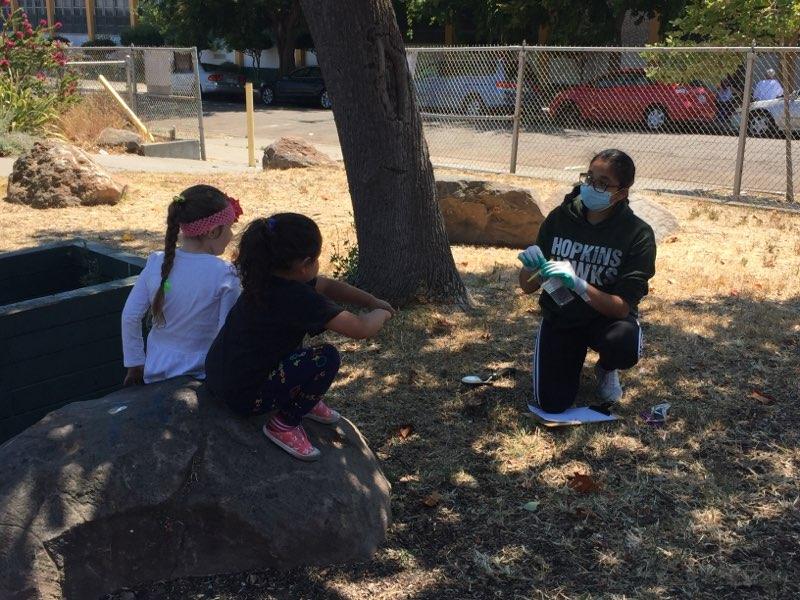
The central component of the CLRT features community-based field research. Youth collect household dust, vacuum debris, and soil samples from residences and mail them to the EBAYS lab for no-cost, industry-standard analysis.* Youth then use the results to develop community action plans.
*Analysis is provided at no cost, compared with the nationwide average of $40 per soil-only sample.
Partners receive:
- Curriculum derived from well-researched programming
- Guided professional learning
- Support from an EBAYS specialist
- Inclusion in the Community
- Science Research network
- All necessary materials
- Free testing of 250 household samples
Commitment includes:
- Facilitating six one-hour sessions
- Providing environmental samples and artifacts of participant work
- Completing a feedback survey
- Optional: one debrief meeting with EBAYS staff